
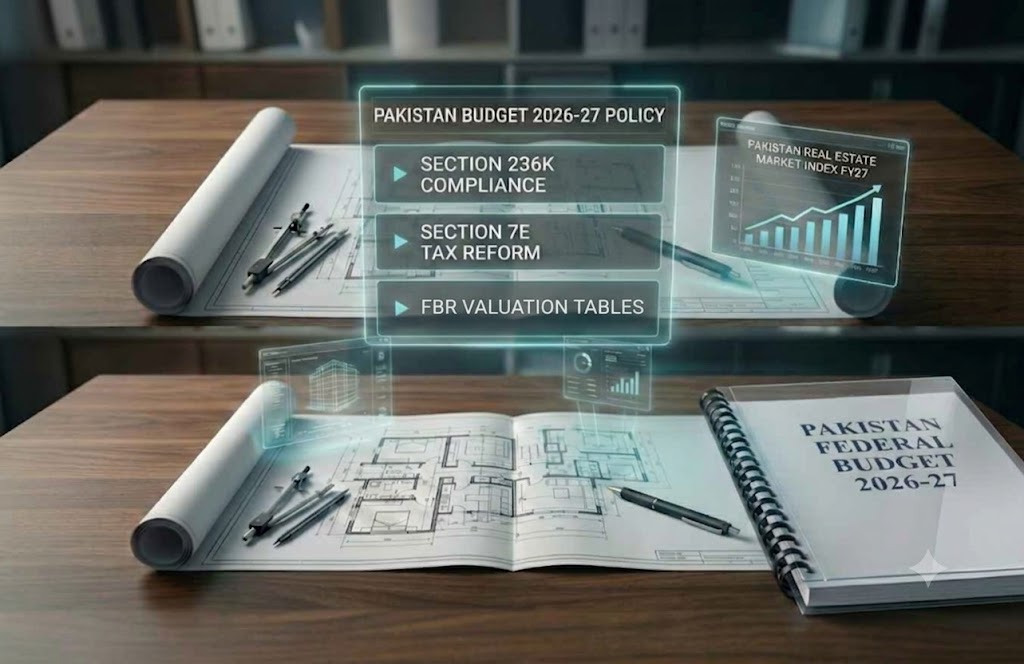
Editor’s Note: This article analyzes the real estate fiscal proposals and tax amendments introduced in the Budget 2026-27 session. These figures are subject to final parliamentary approval and gazette notification.
Pakistan’s real estate and construction sectors have suffered from years of stagnation. Furthermore, steep inflation and strict fiscal tightening drove this decline. However, the sector now faces a defining turning point. As the federal government presents the Budget for Fiscal Year 2026-27 (FY27), policymakers have introduced an aggressive structural stimulus package. Consequently, the new budget aims to transition the sluggish property market into an active economic engine. Moreover, it shifts fiscal focus away from ad-hoc collection. Instead, it rewards documented tax compliance, streamlines transactions, and invites overseas capital.
1. Radical Reductions in Transaction Taxes for Active Filers
The FY27 real estate policy introduces a historic reduction in withholding taxes for Section 236C (sellers) and 236K (buyers). In order to clarify the real-world impact of these updates, the government has finalized these new rates. Consequently, these structural adjustments aim to boost market activity immediately:
- Purchasing Property (Section 236K): The tax rate for active filers is fixed at 1.25% of Fair Market Value. This major change, supported by the Association of Builders and Developers (ABAD), aims to inject immediate liquidity into the property market.
- Selling Property (Section 236C): The advance tax for active filers is fixed at 2.75% of gross consideration.
- High-Value Transactions: For properties exceeding Rs. 100 million, the active filer rate is now capped below 1% to encourage formal investment.
| Provision | Previous Policy (Estimate) | Budget 2026-27 (New) |
| Section 236C (Seller) | 4.5% – 5.5% (Sliding Scale) | Fixed 2.75% of gross consideration |
| Section 236K (Buyer) | 1.5% – 2.5% (Sliding Scale) | Fixed 1.25% of Fair Market Value |
| Section 7E | 1% of FMV (Deemed Income) | Completely Abolished |
Source: Pakistan Budget 2026-27 Property Tax Reforms Guide and Baco Consultants’ Budget 2026-27 Analysis.
2. Capital Gains Tax (CGT) & Section 7E Updates
Investors now face significant changes in how holding periods and deemed income are calculated. Because these updates completely reshape long-term asset strategies, we must analyze the key changes carefully. For example, the following rules now apply to the market:
- Plots and Files: A maximum CGT of 15% applies in the first year. This scales down annually, reaching a full exemption after a 6-year holding period.
- Built Property: A concessionary calculation rate of 1.5% now applies to encourage construction and infrastructure development.
- Vertical Growth: High-rise apartments now benefit from a flat transaction rate of 2%.
- Section 7E: Consequently, the government has moved to roll back Section 7E restrictions that previously discouraged sentiment. Digital exemption certificates will be introduced to simplify this process.
3. Valuation and Documentation Rules
To counter capital flight, the administration is bridging the gap between tax targets and market reality. Therefore, officials are changing how properties are appraised across the country. As a result, the following adjustments will enforce transparency:
- Valuation Adjustments: The FBR is adjusting official property values downward by 30% to 35% in major cities like Islamabad and Rawalpindi.
- DC Rate Alignment: The government is aligning District Collector (DC) rates with FBR valuation tables to stop dual-tax discrepancies.
- Income Documentation: Any purchase over Rs. 10 million must now include a declaration of the legal path of funds. This must be filed within your regular tax returns to ensure compliance.
4. Aggressive Penalties on Non-Filers Remain Intact
While the budget opens a significant window of relief for active tax filers, it maintains strict compliance requirements for undocumented capital. Consequently, investors must carefully document all transaction pathways to avoid heavy penalties. In alignment with international structural benchmarks, the tax delta between filers and non-filers remains substantial. Non-filers attempting to engage in real estate transactions continue to face high withholding tax brackets, reinforcing the government’s mandate to shift all property dealings into the documented economy.
5. Special Provisions for Overseas Pakistanis
- Remittance Facilitation: The government has introduced streamlined verification channels for overseas Pakistanis to reinvest in real estate. Consequently, by utilizing verified, state-mapped remittance channels, these investors can access “filer” tax rates on property transactions. Furthermore, this benefit applies regardless of their resident status, provided they hold a valid NICOP/POC.
- Property Tax Thresholds: Localized provincial schedules continue to govern property tax exemptions for residential units, with immunity thresholds remaining in place for small-scale residential holdings as per existing provincial tax frameworks.
References & Authoritative Citations
Federal Board of Revenue (2026) Salient Features: Budget 2026-27. Islamabad: FBR. Available at: https://fbr.gov.pk/Budget2026-27/SalientFeatures/Salient-Feature.pdf (Accessed: 15 June 2026).
Business Recorder (2026) ‘Buying, selling of immovable properties: WHT rates to be decreased from July 1’, Business Recorder, 12 June. Available at: https://www.brecorder.com/news/40425160 (Accessed: 15 June 2026).
Dawn (2026) ‘Shifting into growth gear’, Dawn, 15 June. Available at: https://www.dawn.com/news/2007906/shifting-into-growth-gear (Accessed: 15 June 2026).
PropTech Convention (2026) Pakistan Budget 2026-27 Property Tax Reforms: Complete Guide. Available at: https://proptech-convention.com/proptech-news/the-digital-transformation-of-pakistans-real-estate-sector-overcoming-the-cash-paradigm-through-fintech-regulation/ (Accessed: 15 June 2026).
As you analyze how these tax shifts impact your specific portfolio, you may also find it helpful to compare market benchmarks, such as our guide on Regi Model Town vs. DHA Peshawar
Consequently, investors looking to navigate these new tax rules can explore current properties listed on the market to find compliant investment options.
Statutory Industry Disclaimer
Notice to Readers: The analytical breakdowns, tax interpretations, and policy parameters detailed in this publication are based strictly on the preliminary Finance Bill 2026-27 and draft legislative documentation currently under active parliamentary review. These items represent proposed fiscal directives and have not yet been ratified into binding statutory law. Additionally, market participants, property developers, and asset managers must verify all finalized tax rates, schedules, and legal exemptions against the officially gazetted Finance Act 2026 before executing major capital allocations, property acquisitions, or legal transfers.